First, regarding materials: Nitrile gloves are made of NBR (a synthetic rubber composed primarily of acrylonitrile and butadiene); PVC gloves are made of polyvinyl chloride; and latex gloves are made of natural rubber latex (NR). What are their respective advantages and disadvantages?
Nitrile gloves are biodegradable and hypoallergenic; they can be pigmented to produce vibrant colors. Their downsides include poor elasticity and a higher price point compared to latex gloves. PVC gloves are inexpensive and can be colored brightly, but they contain high levels of plasticizers—substances internationally recognized as health hazards that release harmful gases when heated—and are not biodegradable. As for latex gloves, they are biodegradable and offer good elasticity, but prolonged use can cause skin allergies in some individuals.
What about their antistatic properties? ESD refers to a product’s antistatic capability; generally, nitrile rubber products are considered to have antistatic properties, whereas PVC and latex gloves do not and are unsuitable for use in ESD-sensitive areas.
In reality, the antistatic performance of nitrile gloves depends on the chemical formulation used; products made from different manufacturers’ raw materials exhibit varying ESD performance—the specific glove factory matters less than the material composition. Even products made from the exact same material can show performance differences. Consequently, while nitrile gloves can serve as general-purpose antistatic gloves, their performance falls short of specialized antistatic gloves.
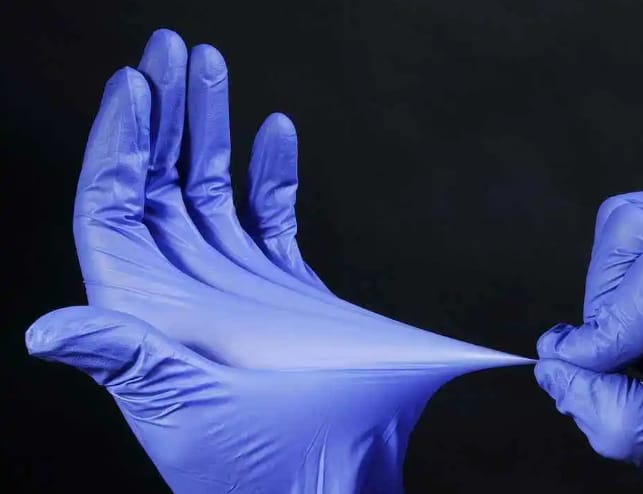
Precautions for wearing nitrile gloves:
1. Do not wear rings or other jewelry on your hands;
2. Keep fingernails trimmed regularly; avoid long nails that could damage the glove fingertips;
3. Prevent punctures from sharp objects such as needles or toothpicks;
4. When removing gloves, peel them off slowly starting from the wrist; do not pull them off by the fingertips;
5. Choose the correct size; gloves that are too small restrict blood circulation, while those that are too large may slip off easily;
6. Inspect regularly; do not use if damage is found.

Precautions for using PVC gloves:
1. Disposable PVC gloves do not offer high-temperature resistance or electrical insulation properties. Do not use in high-temperature work environments; under no circumstances should they be used as insulating gloves.
2. If disposable PVC gloves are punctured or cut, their protective effectiveness is compromised; do not use them.
3. Store disposable PVC gloves in a well-ventilated, dry area to prevent moisture accumulation and mold growth.
4. Avoid contact with corrosive substances while using disposable PVC gloves.

Precautions for latex gloves:
1. Avoid contact with chemicals such as acids, alkalis, and organic solvents.
2. When handling infectious materials, choose powder-free, low-protein latex gloves. These types of gloves can reduce the risk of allergic reactions. However, “hypoallergenic” latex gloves do not reduce the risk of a latex allergy itself; they only minimize allergic reactions caused by chemical additives present in the gloves.
3. Strictly adhere to workplace protocols to minimize risks associated with latex use, such as:
1) Do not use oil-based hand creams or lotions while wearing latex gloves, as these can cause the gloves to deteriorate or become damaged.
2) After removing latex gloves, wash hands with mild soap and dry them thoroughly.
3) Do not reuse disposable latex gloves (as they may have lost their ability to protect against hazardous substances).